
What to Eat After Visiting Sanxingdui Museum: Guanghan Food Guide for Foreign Visitors (2026)
A practical food guide for foreign visitors in Guanghan: what local dishes to try after Sanxingdui Museum, where to eat, and how to plan meals by trip length.
Quick Answer
If you want the easiest meal after the museum: Eat near the museum area or take a short taxi ride into Guanghan city center.
If you want local food: Try Jinsi Mian (金丝面), glass wontons (玻璃抄手), douhua (豆花), red-oil dumplings (红油水饺), and a dry pot meal (干锅).
If you only have half a day: Stay close to the museum and keep lunch simple.
If you have one full day or more: Go into Guanghan city center and try a wider mix of local dishes.
If you have just finished Sanxingdui Museum, the next question is usually simple: what should you eat now?
This is a practical question, because Sanxingdui is not in central Chengdu. You may be tired, hungry, and not want to waste time searching for a good restaurant. The best choice depends on how much time you have and whether you want a quick meal or a local food experience.
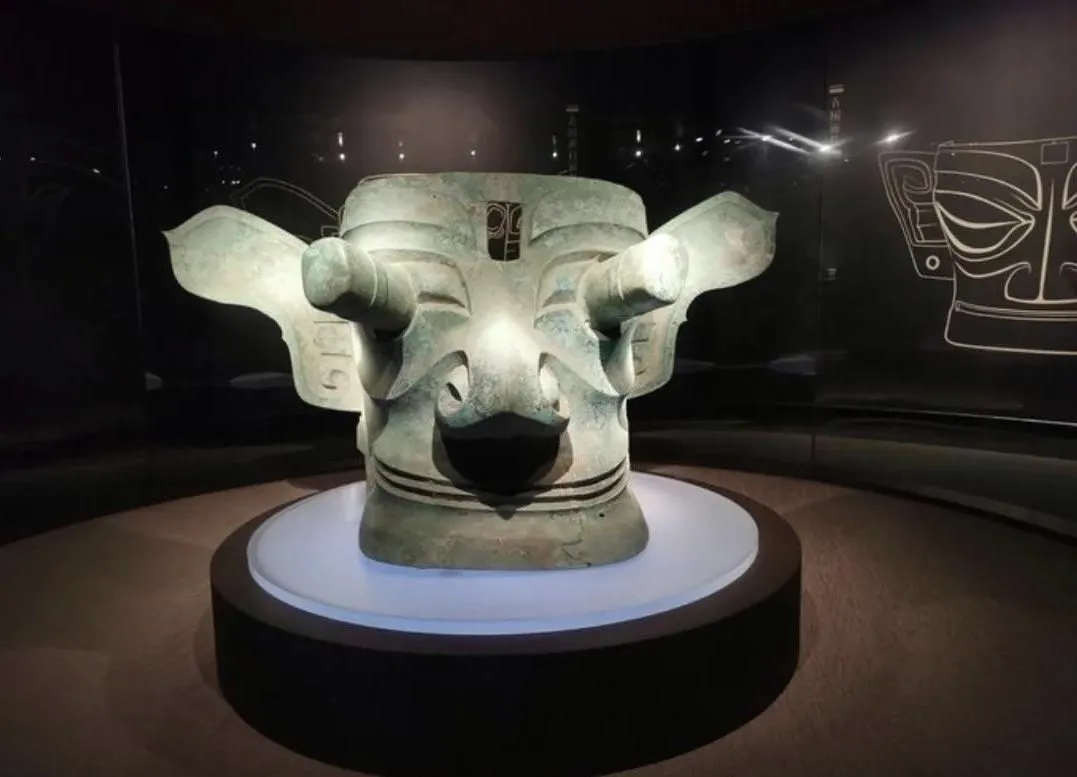 After the museum visit, food planning is often the next practical question.
If you are still planning the trip, you may also want to read:
1. The short answer
| Time available | Best eating plan | Best for |
|---|---|---|
| Half-day | Eat near the museum | Fast and simple |
| One day | Go to Guanghan city center | More food choice |
| Overnight | Eat dinner in Guanghan and try breakfast the next morning | Best overall experience |
If you want the easiest rule, use this:
- Half-day trip: stay close to the museum
- One full day: go into Guanghan city center
- Overnight stay: try dinner plus local breakfast
2. What Guanghan food tastes like
Guanghan belongs to the Sichuan food world, so the local flavor is usually rich, salty, and often spicy.
That does not mean everything is too hot to eat. You can still find mild dishes and snacks. But if you are not used to Sichuan food, it is smart to ask for:
- less spicy
- no chili
- mild flavor
The good thing is that Guanghan also has a lot of breakfast food and snack food, so you do not need to rely only on heavy dishes.
Many small restaurants in Guanghan do not have English menus. In this guide, I include the Chinese names of important dishes, so you can copy them into a map app or show them to restaurant staff.
3. Local dishes worth trying
Here are the foods that make the most sense for a first visit.
Jinsi Mian (金丝面)
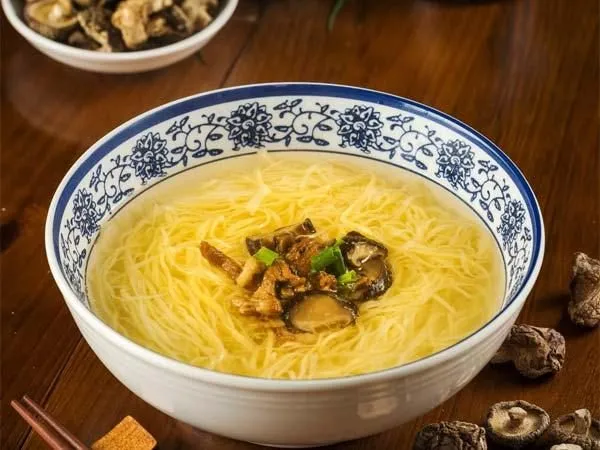
Jinsi Mian (金丝面) is one of the most famous Guanghan breakfast dishes.
It is a very thin handmade noodle, usually served in a light soup. The texture is soft but still smooth. If you want one local dish that feels truly “from here,” this is a very good place to start.
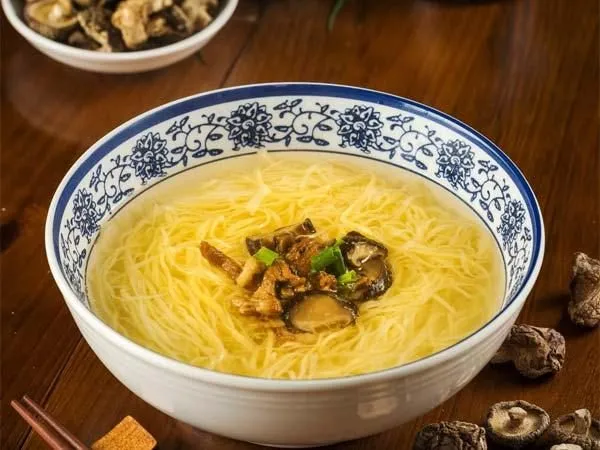 Jinsi Mian (金丝面) is one of the easiest local dishes to try in Guanghan.
Glass wontons (玻璃抄手)
Glass wontons (玻璃抄手) are another local specialty. The wrapper is thin and soft, and the filling is usually pork-based.
The name comes from the look of the skin. It is light, clean, and easy to eat. This is a good choice if you do not want something too heavy.
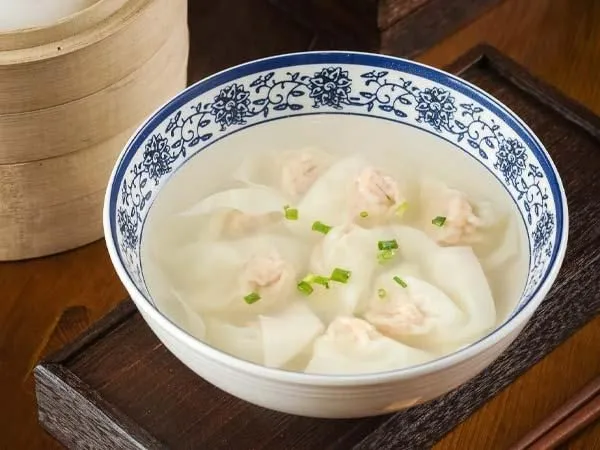 Glass wontons (玻璃抄手) are mild and easy to eat if you do not want a spicy meal.
Douhua (豆花)
Douhua (豆花) is soft tofu pudding, and Guanghan has several ways to eat it.
You may see:
- sweet douhua (甜豆花)
- spicy beef douhua (牛肉豆花)
- douhua noodles (豆花面)
If you want a safe first choice, sweet douhua is usually the easiest. If you want a more local flavor, try the spicy versions.
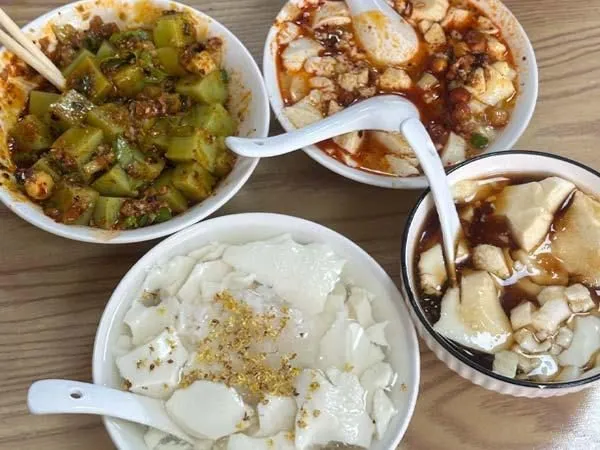 Douhua (豆花) can be sweet, mild, or spicy depending on the shop.
Red-oil dumplings (红油水饺)
Red-oil dumplings (红油水饺) are a classic Sichuan-style snack.
They are usually served with chili oil, a little sweetness, and a strong aroma. The dumplings themselves are soft, and the sauce is the main reason people order them.
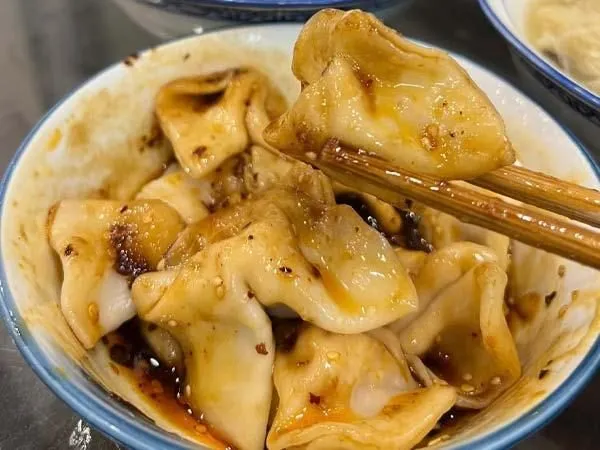 Red-oil dumplings (红油水饺) are a classic Sichuan-style snack.
Lianshan handmade noodles (连山手工面)
Lianshan handmade noodles (连山手工面) are a good option if you want something filling.
They usually have more bite than soft breakfast noodles and often come with beef or soup. If you are hungry after a long museum visit, this is a safe and practical meal.
Ye’er Ba (叶儿粑) and glass shaomai (玻璃烧麦)
These are more like local snack items than a full meal.
Ye’er Ba (叶儿粑) is soft and sticky, with a wrapped filling inside. Glass shaomai (玻璃烧麦) has a very thin skin and a light, delicate texture. Both are good if you want to try something local without ordering a big dish.
Rabbit dishes and dry pot (兔肉 / 干锅)
If you want a stronger Sichuan-style dinner, Guanghan also has rabbit dishes (兔肉) and dry pot meals (干锅).
Rabbit dishes are very common in Sichuan. Dry pot (干锅) is another popular choice, especially if you want a more energetic dinner with lots of flavor.
These are better for dinner than for a quick museum lunch.
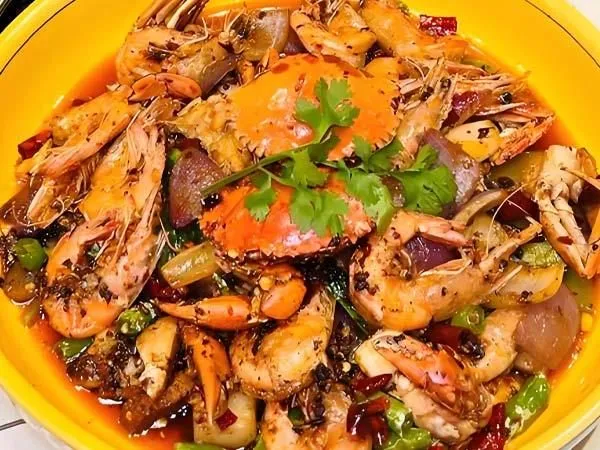 Dry pot (干锅) dishes are better if you have time for a proper dinner.
Sweet snacks and desserts (甜品小吃)
After spicy food, local desserts can be very useful.
Good choices include:
- bingfen (冰粉)
- chaobing (炒冰)
- tangyouguozi (糖油果子)
These are simple, local, and good for cooling down after a spicy meal.
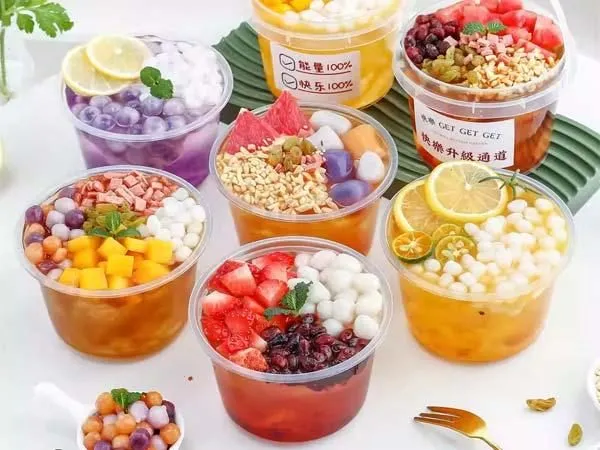 Bingfen (冰粉) and other cold desserts are useful after a spicy meal.
4. Where to eat based on your schedule
The right food area depends on how long you stay in Sanxingdui.
If you only have half a day
Stay close to the museum.
This is the best choice if you want to save time. You can eat in the museum area, take a short taxi ride, or choose a simple restaurant on the way back. The goal here is not to explore every food option. The goal is to eat well without losing too much time.
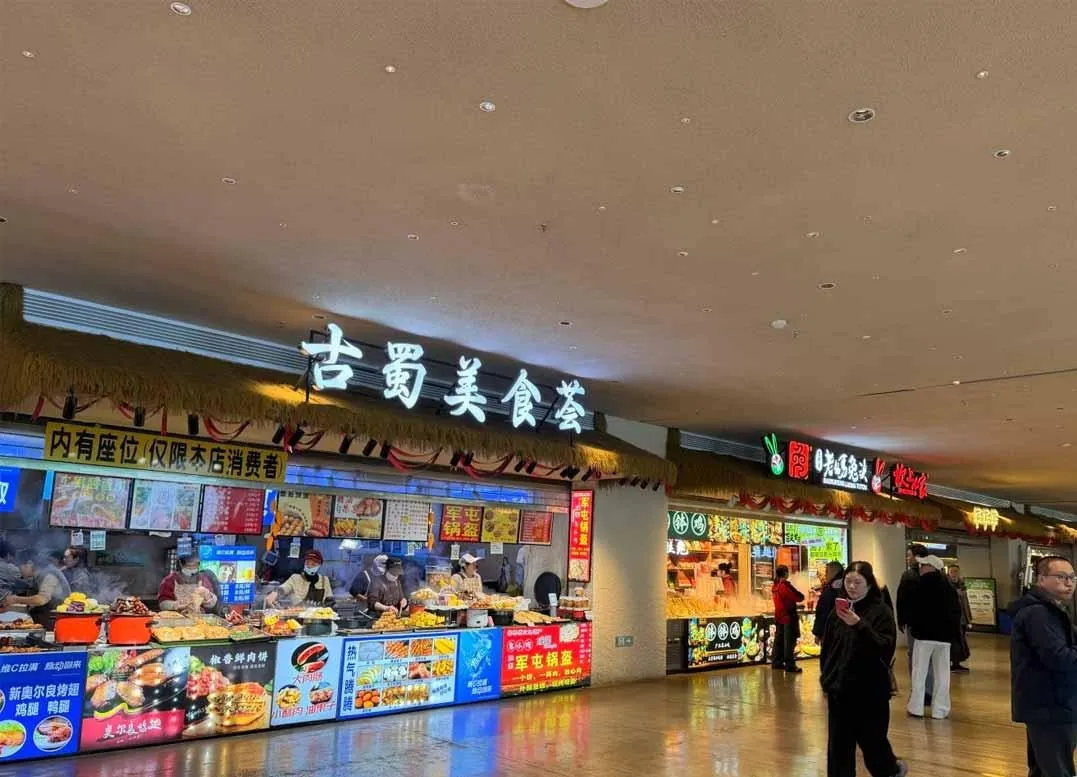 The closest options are useful when you only have a short visit.
If you have one full day
Go into Guanghan city center.
This gives you a wider choice. You can find more snack shops, dry pot places, noodle shops, and small local restaurants. If you want the trip to feel more complete, dinner in the city center is usually better than staying only in the museum area.
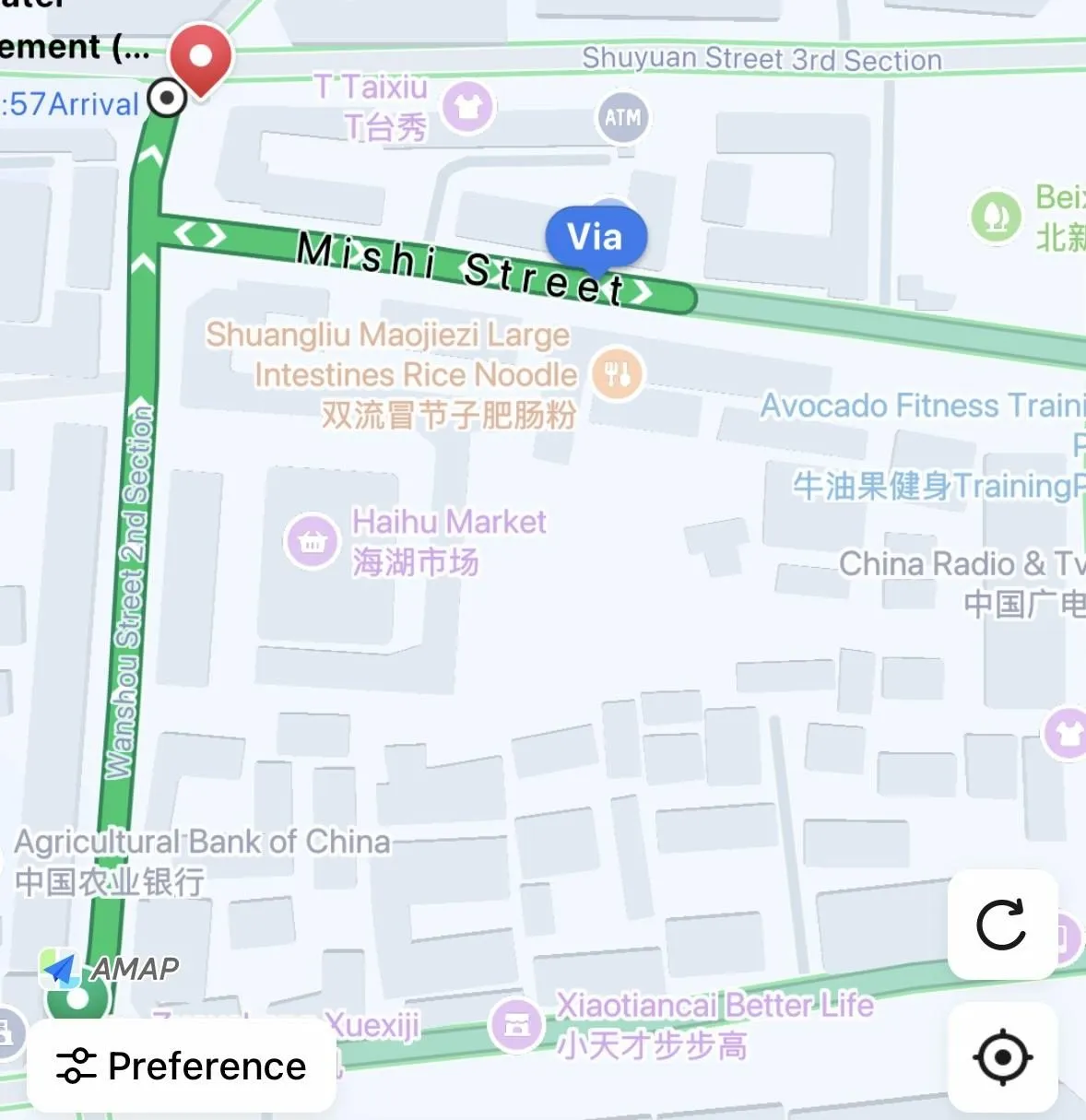 Guanghan city center usually gives you more choice than the museum area.
If you stay overnight
Try dinner and breakfast.
This is the best way to experience Guanghan food properly. Dinner can be more varied and breakfast can show you the local comfort food side of the city. If you stay one night, do not miss breakfast the next morning.
5. Vegetarian and Muslim visitors
Yes, there are options for both groups.
If you are vegetarian, look for:
- temple meal options
- dedicated vegetarian restaurants
- tofu, noodle, and vegetable dishes such as douhua (豆花) or vegetable noodles (素面)
If you are Muslim, search in your map app for:
- halal noodles (清真面馆)
- halal restaurant (清真餐厅)
兰州拉面
The key point is to check the restaurant before you go. In smaller cities, names can be similar, but the actual menu may vary.
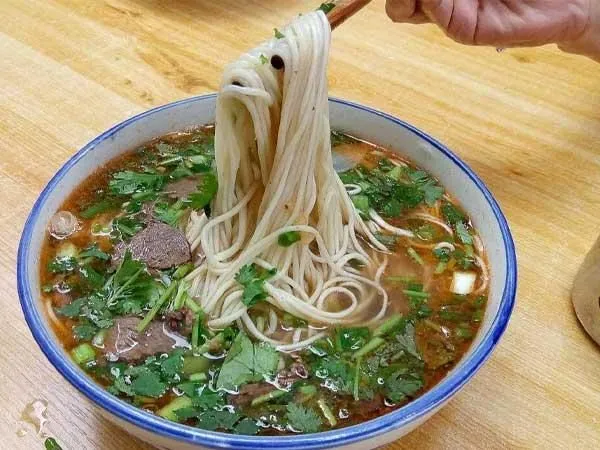 Search for Lanzhou noodle restaurants (兰州拉面) if you need a simple halal option.
6. Useful tips before you order
These small details can make the meal much easier:
- Guanghan food is often spicy, so say
less spicyif needed - Many dishes are designed for sharing, so solo travelers should order carefully
- Dry pot and rabbit dishes can have a lot of bones
- Use Didi or a taxi if you want to move from the museum to the city center
- Save the restaurant name in Chinese before you leave
If you use a map app, it helps to save the restaurant before you start walking or taking a car.
7. My simple recommendation
If I had to keep this very simple, I would say:
- Half-day visit: eat near the museum
- One-day visit: go into Guanghan city center
- Overnight stay: try dinner and local breakfast
For first-time visitors, the safest food order is:
- Jinsi Mian (金丝面) or glass wontons (玻璃抄手)
- Douhua (豆花)
- One local snack
- One spicy dinner if you want to try the Sichuan side of Guanghan
8. FAQ
What is the best local food to try after visiting Sanxingdui Museum?
Jinsi Mian (金丝面) is probably the best first choice because it is local, easy to eat, and good for breakfast or lunch.
Is Guanghan food very spicy?
Many dishes are spicy, but not all of them are. You can still find mild food, especially noodles, tofu dishes, and sweet snacks.
Can I eat near the museum?
Yes. If you only have a half-day trip, staying near the museum is the easiest option.
Is it worth going to Guanghan city center for dinner?
Yes, if you have enough time. The city center usually gives you more choice and a better local food experience.
Can vegetarian visitors find food in Guanghan?
Yes. Vegetarian restaurants, temple meals, tofu dishes, and noodle dishes are all possible options.
9. What to read next
- How to Get to Sanxingdui Museum from Chengdu
- Best Map App for China
- Sanxingdui Museum Tickets for Foreign Visitors
Final thought
The best meal after Sanxingdui is usually not the most famous one. It is the one that fits your time, your route, and your energy after the museum. If you keep that simple rule in mind, Guanghan food becomes much easier to enjoy.