
Sanxingdui’s Meteoritic Iron Artifact: A New Clue from Pit 7
A clear guide to the newly reported meteoritic iron artifact from Sanxingdui Pit 7 and what it may reveal about the Bronze Age site.
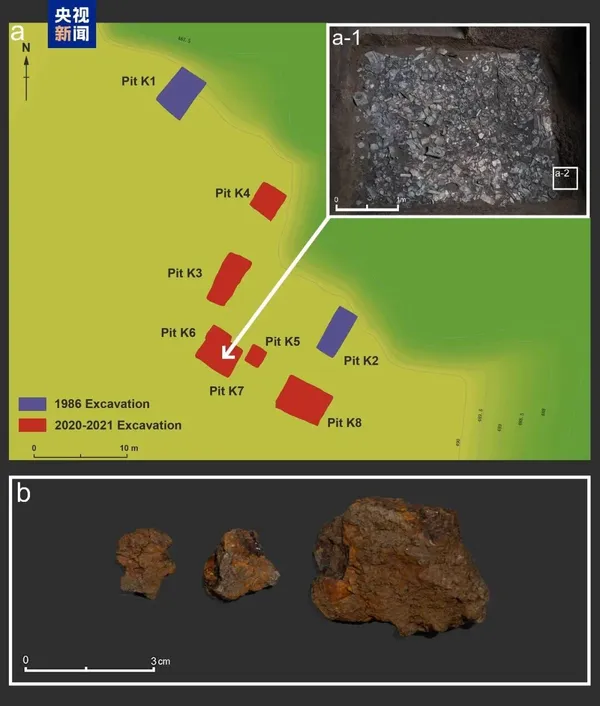
Quick Answer
What was reported: Researchers identified a meteoritic iron artifact from Sanxingdui Pit 7.
Why it matters: It may be the earliest known meteoritic iron artifact of the Chinese Bronze Age.
What we know: The object is linked to a 2026 paper in Archaeological Research in Asia.
What remains uncertain: Its exact use has not been confirmed.
Sanxingdui is famous for bronze masks, golden objects, jade, and ivory. But a newly reported find adds a different material to the story: meteoritic iron.
According to a 2026 research article, a team connected with Sichuan University and the Sichuan Provincial Institute of Cultural Relics and Archaeology identified a meteoritic iron artifact from Pit 7 at Sanxingdui.
That does not mean every mystery is solved. In fact, this small object opens a new question: why would a piece of iron from a meteorite appear in a Sanxingdui ritual pit?
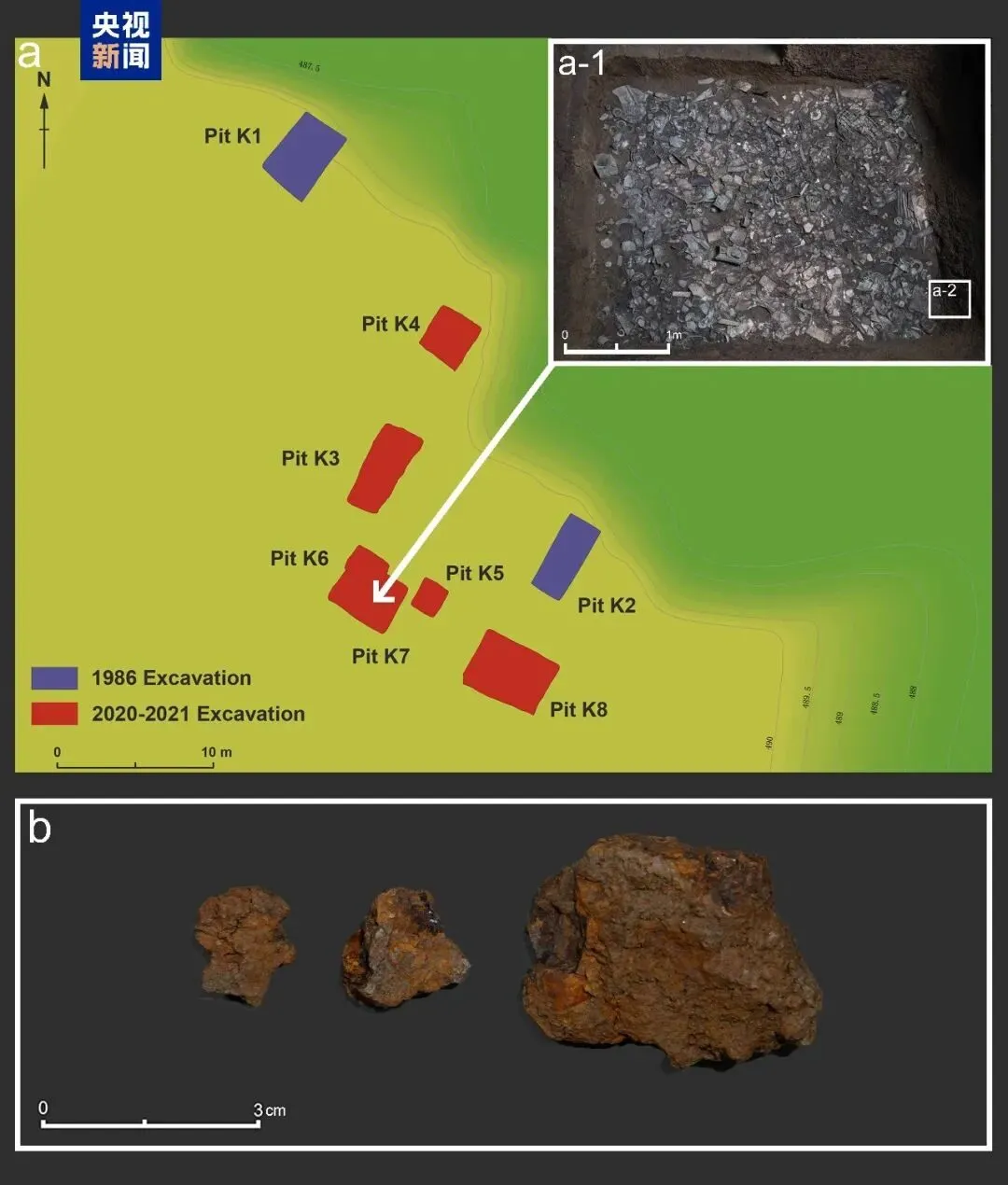 The reported meteoritic iron artifact is connected with Sanxingdui Pit 7.
1. What was found?
The object was found in the sacrificial area of Sanxingdui, in Pit 7.
The article reports that the object is long and narrow. It is not very large compared with the famous bronze objects at Sanxingdui, but its material makes it important.
The key point is simple:
- it is not normal bronze
- it is not ordinary smelted iron
- it was identified as meteoritic iron
Meteoritic iron means iron that originally came from a meteorite. Before iron smelting became common, this kind of metal could be rare and special.
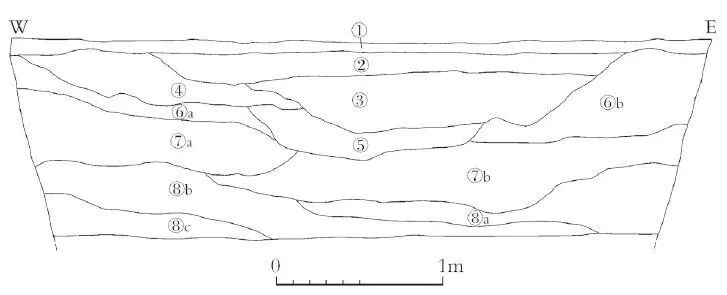 A section drawing connected with Pit 7 helps show the archaeological context.
2. Why is this important?
This discovery matters because Sanxingdui is usually understood through bronze, gold, jade, and ivory.
The meteoritic iron artifact adds another material to the picture. It suggests that people in the ancient Shu world may have known about, collected, or used rare natural iron before iron smelting was widely developed.
It is also important because many earlier meteoritic iron finds in China are connected with northern or Central Plains contexts. A Sanxingdui example shows that the upper Yangtze region also belongs in this early story of rare iron use.
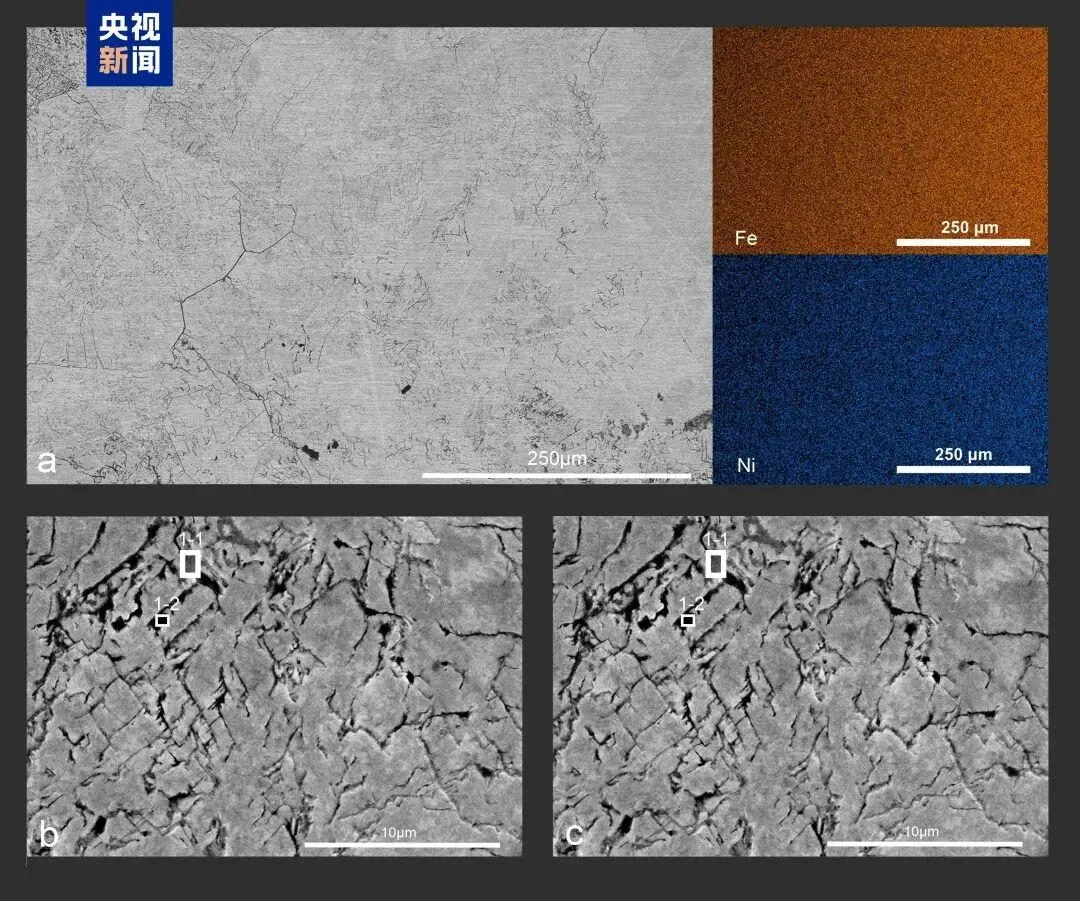 Scientific analysis helped researchers identify the object as meteoritic iron.
3. Was it a tool, weapon, or ritual object?
This question is fascinating, but the current evidence does not give a final answer.
The object was badly corroded, and its full original shape is not easy to read. It looks long and narrow, so it may remind people of a tool or blade-like object. But that does not prove its use.
There are several possible ways to think about it:
- it may have been a practical tool
- it may have had a weapon-like form
- it may have carried ritual meaning because of its rare material
- it may have been placed in the pit after use
For now, the honest answer is simple: its exact role is still unknown.
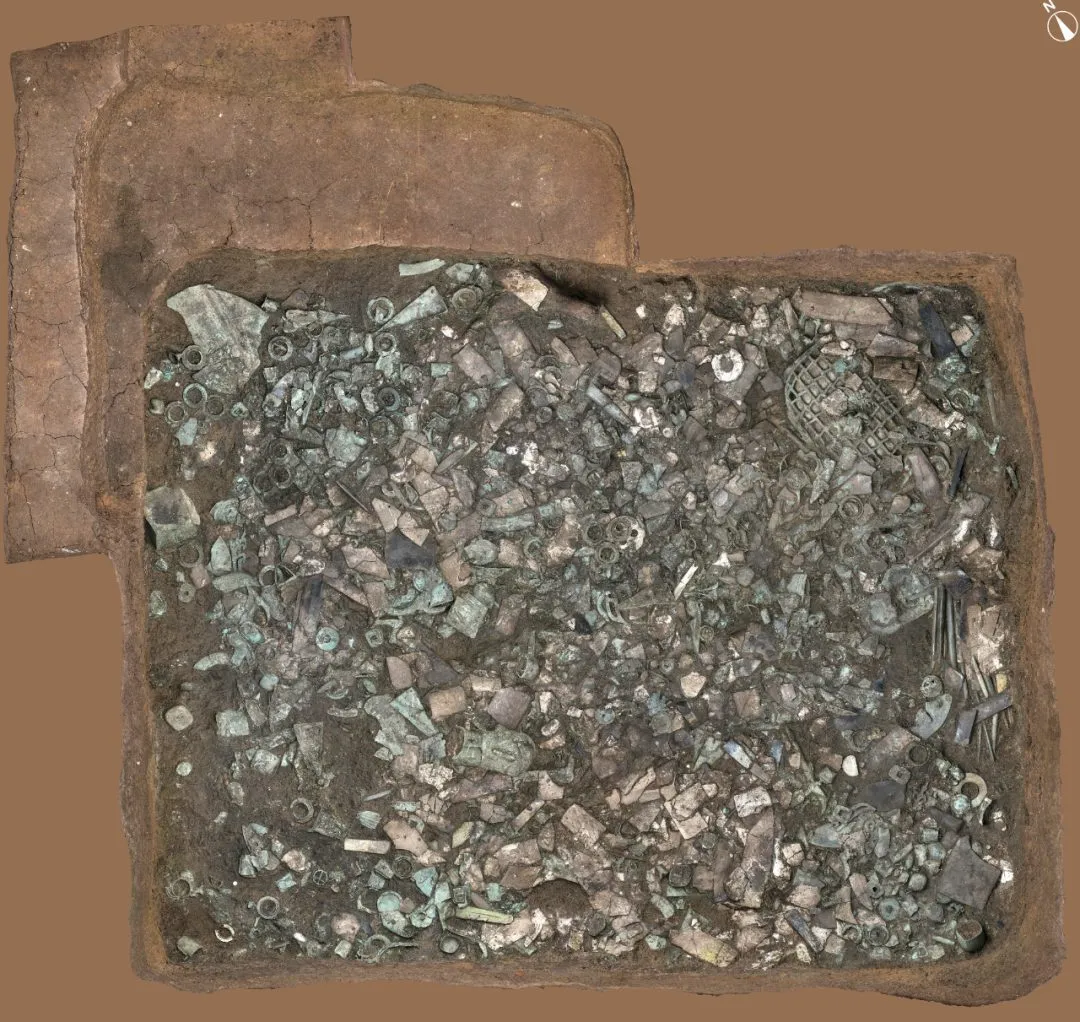 Pit 7 contained many objects, so the context matters as much as the material itself.
4. Why Pit 7 matters
Pit 7 is part of the Sanxingdui sacrificial area. This matters because the pits are not normal trash pits or simple storage places.
Sanxingdui pits have produced bronze objects, masks, ivory, and many unusual ritual materials. When an object made from meteoritic iron appears in this context, it becomes more than a material fact.
It raises questions about belief, ritual, and how ancient people understood rare things from nature.
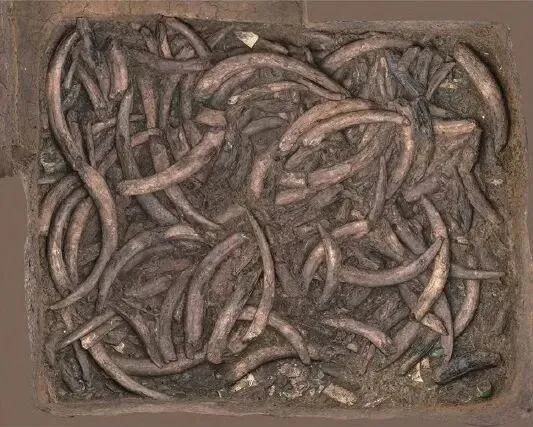 Other ritual materials, including ivory, help explain why Pit 7 is archaeologically important.
5. What this means for visitors
For most visitors, this discovery is useful because it gives you a new way to read Sanxingdui.
When you visit the museum, do not only look at the size of the bronze masks or the mystery of the bronze sacred tree. Also pay attention to materials.
Sanxingdui is powerful because it brings many rare materials together:
- bronze
- gold
- jade
- ivory
- and now, possibly in this reported case, meteoritic iron
That mix tells us something important. Sanxingdui was not just a place with beautiful objects. It was a place where materials, ritual, technology, and imagination came together.
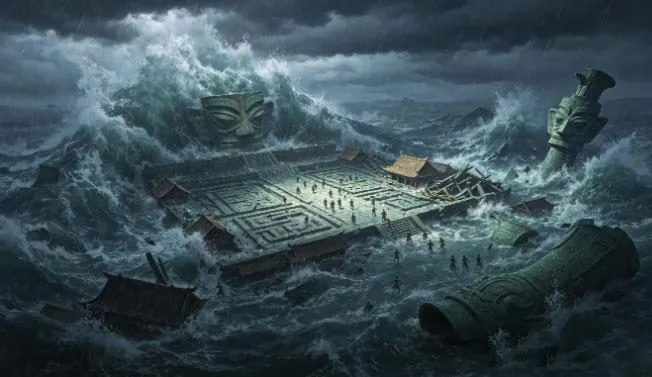 Concept image only. It is used here to help visitors imagine the question, not as an archaeological record.
6. Can visitors see this artifact now?
Not necessarily.
The research has been reported in an academic article, but that does not automatically mean the object is already on public display. Museum display decisions can take time, especially for fragile or newly studied artifacts.
Even if this exact artifact is not visible in the gallery, the discovery can still help you understand why Pit 7 and the new excavations are important.
7. Source
This article is based on the research paper:
- Haichao Li, Zishu Yang, Yuniu Li, Jiahui Liu, Yu Lei, and Honglin Ran. “The earliest meteoritic iron artefact of the Chinese Bronze Age discovered at Sanxingdui, Southwest China.” Archaeological Research in Asia, Volume 46, 2026, Article 100692. DOI: 10.1016/j.ara.2026.100692
8. FAQ
What is meteoritic iron?
Meteoritic iron is iron that comes from a meteorite. In ancient times, it could be used before people had common iron-smelting technology.
Was this artifact made by smelting iron?
The research identifies it as meteoritic iron, not ordinary smelted iron. That is why it is so interesting for Bronze Age archaeology.
Does this change the meaning of Sanxingdui?
It adds one more layer. Sanxingdui was already important for bronze, gold, jade, and ivory. Meteoritic iron suggests that rare natural materials may also have played a role.
Is the artifact on display at Sanxingdui Museum?
Not necessarily. A research report does not always mean the object is already displayed. Check the museum's current exhibition information before your visit.
9. What to read next
- How to Get to Sanxingdui Museum from Chengdu
- Sanxingdui Museum Tickets for Foreign Visitors
- What to Eat After Visiting Sanxingdui Museum
Image note
Some images in this article are used as research or reference illustrations. If you are a rights holder and have a question about any image, please contact me and I will review it promptly.